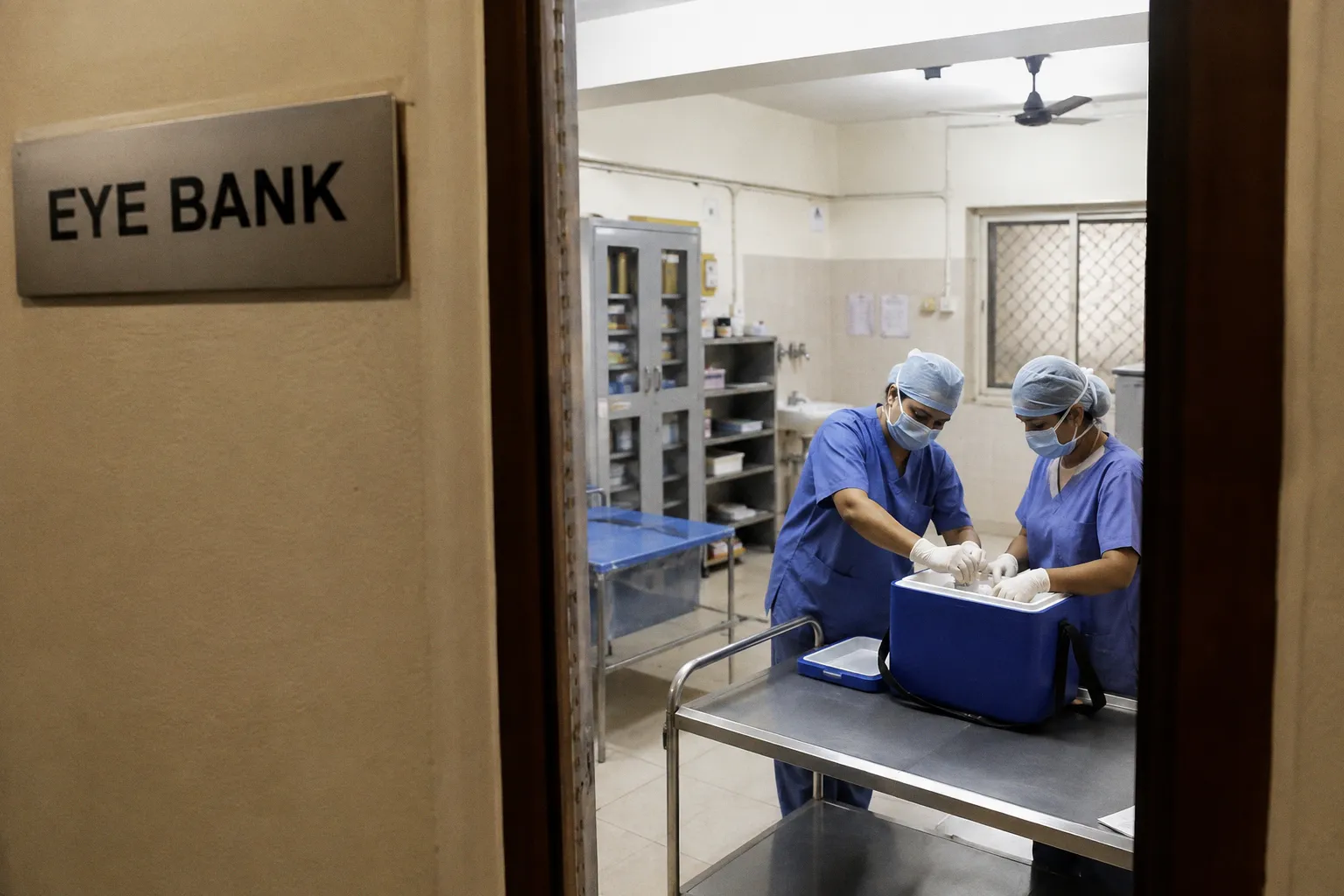
According to a recent analysis, the disconnect between donor intent and next-of-kin authorization, coupled with uneven retrieval infrastructure, creates a procurement latency that leaves a substantial patient backlog waiting for sight-restoring surgery. The gap between pledge and procured tissue defines the core challenge for India's ocular biobanking ecosystem.
The Consent and Registry Gap
The problem begins at the interface of legal consent and grieving families. While an individual may pledge their eyes, the final decision often rests with relatives during the acute phase of loss. This friction point is compounded by the absence of a centralized national registry for pledged donors. Experts note that disparate record-keeping across eye banks prevents a coordinated, system-wide outreach to potential donor families. A unified database could, in theory, streamline the communication chain, but its current absence creates a significant procurement latency. The solution may require integrating donation consent into formal identification documents, a practice observed in other jurisdictions, to make donor intent immediately actionable.
Expanding Retrieval and Preservation Infrastructure
Parallel to the consent challenge is the physical network for tissue collection. Recent operational updates highlight a push to expand hospital-based retrieval programs. The National Eye Bank at AIIMS, for example, has integrated three new hospitals into its network to enhance post-mortem collection capacity. Simultaneously, infrastructure for tissue preservation is scaling; the same center has distributed thousands of vials of its indigenous corneal preservation solution, ExStorSol, to partner eye banks across dozens of states. Such distribution of standardized preservation media is a logistical prerequisite for maintaining tissue viability across a geographically dispersed retrieval network.
Processing Advances and Yield Metrics
On the downstream end, processing capabilities are advancing to maximize the utility of procured tissue. The TK Eye Bank, marking a decade of operation, reports recovering over 8,000 donor corneas and facilitating more than 4,500 tissue utilizations. A key part of its recent expansion includes preparing pre-cut sterile tissues for endothelial keratoplasty techniques like DSAEK. Furthermore, the field is leveraging split-cornea processing, allowing a single donor cornea to serve multiple recipients. This directly improves the yield per procured specimen, a critical efficiency metric for the entire biobanking workflow. The integration of advanced processing with expanded retrieval forms the dual track needed to narrow the transplant gap.