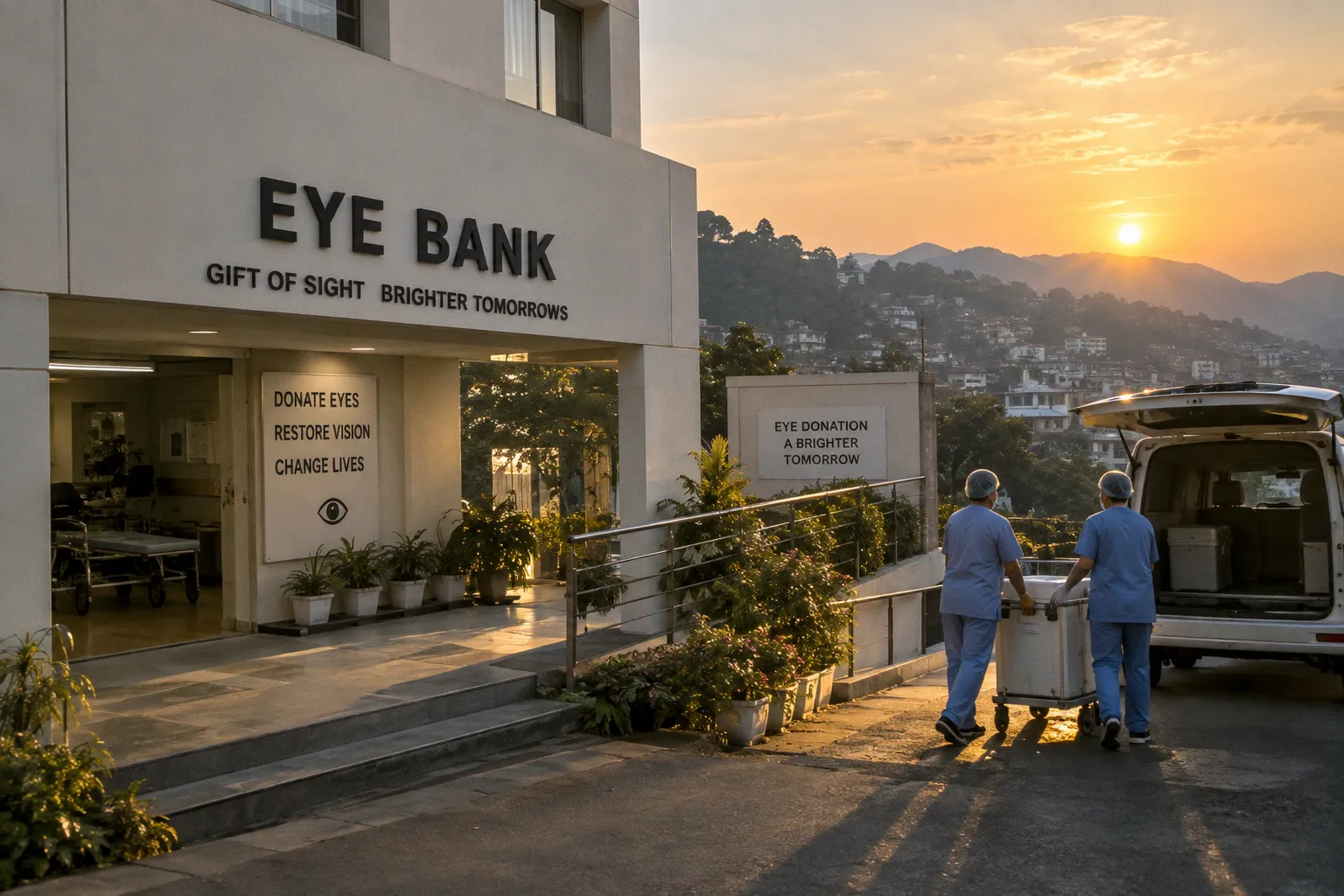
The campaign’s practical significance is not limited to pledge counts. It exposes the narrow post-mortem window in which eye-bank teams must convert a potential donation into viable research or transplant tissue.
Eligibility is not a binary screening gate
The campaign clarified that systemic conditions such as diabetes mellitus do not automatically exclude a donor from corneal tissue procurement. That distinction matters because an overly broad public assumption about ineligibility can reduce the effective donor pool before an eye bank has performed its own assessment.
For procurement systems, the relevant workflow is therefore not a simple yes-or-no declaration made in advance. A donor’s medical history remains part of the screening process, but the presence of diabetes alone was identified by ocular specialists as compatible with eligibility for corneal tissue procurement.
This is a data-quality issue as much as a clinical one. Registries and family notifications need to preserve usable medical information rather than filter potential donors through unsupported assumptions. The tissue decision belongs within the eye-bank protocol.
Retrieval latency remains the critical variable
Netmeds reported that post-mortem retrieval within four to six hours is essential for ensuring high tissue viability. That interval places a hard constraint on the entire chain: notification, coordination with the eye bank, team dispatch, consent and documentation, retrieval, and subsequent tissue handling.
A pledge without a reliable notification pathway does not produce throughput. The operational value of a donor registry depends on whether the relevant people know about the pledge and can activate the eye-bank response quickly. In systems terms, the bottleneck is not only recruitment. It is procurement latency.
The same constraint applies to research-oriented ocular tissue programs. Tissue quality is shaped before any laboratory assay begins. Delays at the first stage can reduce the usable output available for transplantation or downstream investigation, even when the initial donor pool is large.
Mizoram provides a measurable local signal
ThePrint reported that the Mizoram Eye Bank retrieved 42 donor corneas and facilitated 23 corneal transplants during the fiscal year through July. The state’s pledged-donor registry expanded during the 41st Eye Donation Fortnight, reaching 9,345 pledges.
These figures should be read as separate stages of the pipeline. Pledges represent declared intent. Retrieved corneas represent successful procurement. Transplants represent tissue that progressed through assessment and clinical use. The difference between those stages is not explained by the available evidence, but the separation is operationally important: registry growth should not be treated as a direct proxy for transplant volume.
For eye-bank planners, the immediate metrics to track are therefore straightforward: the size and quality of the notification registry, time from death notification to retrieval, number of tissues retrieved, and the number that proceed to use. The 2026 campaign has supplied a clear systems assessment: eligibility messaging can protect the donor pool, but retrieval speed determines how much of that pool becomes viable tissue.