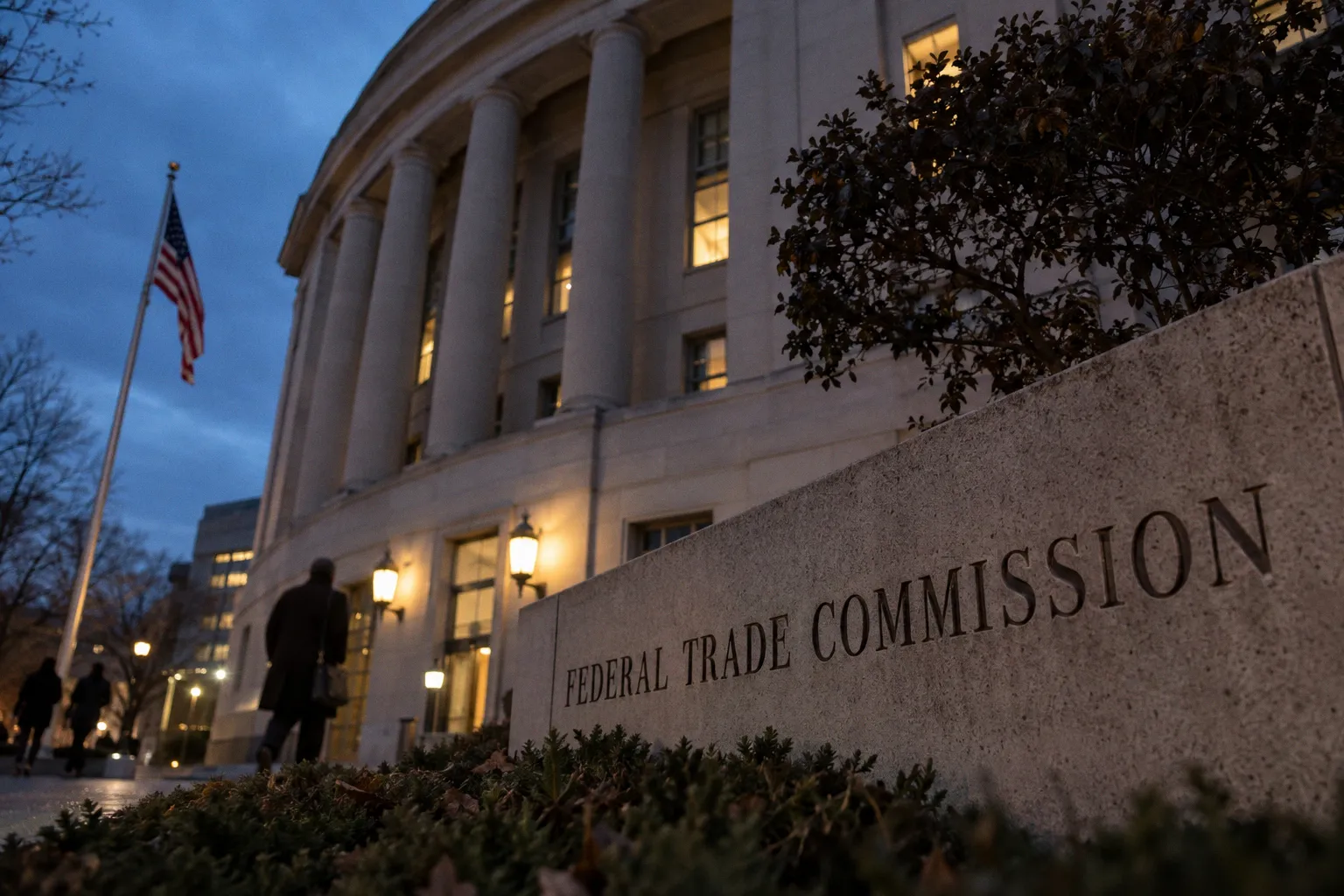
The Federal Trade Commission has rescinded its 2021 Policy Statement on Breaches by Health Apps and Other Connected Devices—a guidance document the agency now labels unnecessary. For ocular biobanking teams whose data pipelines route through connected instruments, tissue tracking platforms, or cloud-hosted donor records, the removal eliminates one reference node from the compliance matrix without signaling what fills the gap.
A Guidance Layer Removed, Enforcement Posture Unclear
Its formal rescission strips that interpretive layer away. The Commission characterized the document as no longer necessary; beyond that, the published notice provides limited detail on rationale or successor frameworks.
The practical consequence for eye bank operations is structural rather than immediate. Any internal SOP, vendor contract, or data governance policy that referenced the 2021 statement as a compliance benchmark now points at a document that no longer exists on the books. That reference gap should be logged and audited—preferably before the next external compliance review.
Infrastructure Audit, Not Alarm
Health data in ocular biobanking increasingly transits connected endpoints: cold-chain telemetry sensors, LIMS integrations, mobile screening interfaces, remote-access tissue viability dashboards. Each endpoint represents a potential breach vector. The 2021 policy statement had served as an interpretive signal for how breach obligations attached to those vectors. Without it, the signal reverts to whatever baseline statutory authority and enforcement precedent the FTC elects to apply on a case-by-case basis.
The operational response is straightforward: identify which components of the data stack relied on the rescinded guidance as a documented control reference. Update vendor agreements accordingly. Do not dismantle breach-response protocols—the underlying data protection obligations have not been withdrawn, only one articulation of how they applied to connected health devices.
Monitoring the Enforcement Docket
The Commission's notice offers no indication of forthcoming replacement guidance. That absence is a data point worth logging. Enforcement posture may shift toward individual actions rather than standing interpretive statements, which raises the variance on how regulators evaluate breaches involving connected biospecimen logistics tools.
Eye bank data strategists should track the FTC's enforcement docket for cases involving health data from connected devices. The pattern—if one emerges—will define the de facto compliance framework more reliably than any single policy document ever did. In the interim, the gap is real, and it lives in your documentation audit queue.